


DUCAT PRIZE


2026 DUCAT PRIZE
Kristo Saarikoski
What is the relationship between a painting and its materials? Plants and animals provide pigments from which a wide variety of hues can be evoked, as does the soil with its minerals and organic matter. Could one think of a painting as a manifestation of these materials? As if they were continuing their lives within the painting – which is born from the artist’s choices and grows out of them? Thoughts like these arise when viewing the latest paintings by Kristo Saarikoski (b. 1992, Tuusula).
Saarikoski is an artist who approaches the materials of painting with care and reverence. In his work, he explores the painting materials and techniques that are offered by tradition: tempera, oil paint, and fresco. He tells us that he began as a graffiti artist. Graffiti, too, has a tradition: urban graffiti speaks to one another, layers into dialogues, and comments on the world and society.
The paintings also converse with one another. Saarikoski’s paintings engage in a dialogue with the modern tradition, with both abstract and representational painting. Their colors and texture bring to mind the color palettes of the Symbolists or Surrealists, as well as the surface textures of 1960s Informalist paintings.
Despite his background in graffiti, Kristo Saarikoski does not simply repeat his highly distinctive stylistic approach by expanding upon it. Rather, he seems to begin each work as if experimenting anew with how a painting might be created. Saarikoski conceives ideas specific to the painting itself through the act of painting. This way of thinking is influenced both by the various traditions of the history of painting and by the initial concept with which he begins his paintings and how, through the process of working on them, he transforms it into a “resolved” – that is, a finished – entity. Even when finished, however, this entity feels alive, because it reveals the history of its revelations and its creation.
In Saarikoski’s own words, painting “structures thoughts, provides security, but above all leads toward the unknown.” Saarikoski is a classical, immersive painter who thrives in the company of the unknown without seeking to resolve or exhaust it. The act of painting itself is a comforting refuge for him.
Although Kristo Saarikoski has a background in graffiti, he does not simply replicate it. In his works, we can experience echoes of the history of painting, colors that feel warm and inviting, and allusions to themes previously explored in his paintings. The meaning of the work arises from the artist’s personal observation, the simultaneous emergence of elements offered by tradition and those guiding the artist’s hand – simply being exactly as it is.
Painter Kristo Saarikoski lives and works in Helsinki. Saarikoski graduated as a painter from the Free Art School in 2024 with a scholarship from the Anita Snellman Foundation, after which he began his master’s studies at the Academy of Fine Arts in the spring of 2026.
Saarikoski’s solo exhibitions have been on view in recent years at venues such as Galerie Forsblom and Galleria Huuto. He has also actively participated in group exhibitions in Finland and internationally, most recently in the “Nuoret 26” exhibition at Taidehalli. In addition to his exhibition activities, he has worked at research residencies at the Finnish Institute in Rome and at the Finnish Artists' Studio Foundation researching the techniques of fresco painting, among other things.
In addition to his work as a painter, Saarikoski works as an art instructor for special needs groups. He holds a Bachelor of Social Services (AMK) and specializes in working with people with disabilities.
Archive
2025
Lada Suomenrinne
b. 1990, MURMANSK
Lada Suomenrinne is an artist from Sápmi, with roots in Northern Russia. Their artistic practices consists of photography, moving image and text.
Their work is founded in belonging and the body-land trauma they explore in the imaginary landscapes of their works. Their objective is to create a dialogue with seen and unseen other species and ancestors. Suomenrinne is fascinated with the borderland and its unseen Sámi lakes, through which they explore the utopian landscapes of alternative worlds. Together with the land, they seek a safe place as an indigenous person at the end of the world.
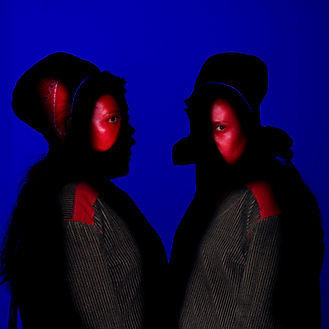
2023
Emilia Tanner
b. 1990, ESPOO
Emilia Tanner’s key medium is paper. Her aesthetically engaging minimalistic pieces possess a heightened sense of materiality. The illusions they evoke are disrupted by the torn and perforated surfaces. Tanner’s art reflects on the themes of time, change and transience. The paper undergoes a transformation process, either slowly through exposure to sunlight, or quickly by means of laser burning.
Tanner’s stylistic register ranges from the graphic to the sculptural, from minimalism to monumentalism. Her pieces can be experienced on many levels, either from close up or afar, on a scale from miniature to huge and back again.

2021
Emma Jääskeläinen
b. 1988, ESPOO
Emma Jääskeläinen works with traditional sculptural materials, but within a framework of contemporary issues and a contemporary visual language. Her work has been exhibited in the main lobby of Kiasma in 2020, where her pieces evoked powerful physical sensations through their shifts in scale and use of space. Jääskeläinen masters her material in such a way that the stone supports a sense of physicality; it appears fleshy, safe, and warm, while at the same time these sculptures connect to the almost archaic, primal forms of sculpture.
Emma Jääskeläinen graduated from the Academy of Fine Arts at the University of the Arts Helsinki in 2018. She lives and works in Espoo.

2019
Essi Kuokkanen
b. 1991, PIEKSÄMÄKI
Essi Kuokkanen’s art features a strong and original visual language and is highly independent in its nature, without relying on external models or art movements. The images tell a story rather than merely illustrating it; the focus is on the painting itself, in which the visual concept and narrative are one and the same. The subjects often address even painful aspects of the human condition in this world, but with gentleness and humor. Difficult issues fall into place within the painting and become less distressing. The starting point is serious, but the images contain humor and joy. The end result is something new.

2017
Jaakko Pallasvuo
s. 1987, LOHJA
Jaakko Pallasvuo rejects categorizations and definitions, and represents a new kind of artistry in the Internet age. He defines the context for presenting his own art and employs countless different styles and ways of working. His works are teeming with references to various themes. Unifying themes include a sense of community and the multiplicity of the self. Pallasvuo is known for his video essays, which are partly autobiographical and explore the construction of identity, and in which the artist portrays many different characters. Although the nature of the works is fundamentally representative of humanity at large, the feeling conveyed by them is strongly personal.

2015
Tuomo Rainio
s. 1983, ESPOO
Tuomo Rainio vie modernia teknologiaa omaperäisesti käyttäen taiteen perinnettä eteenpäin. Video- ja valokuvateosten ytimessä ei ole itse kuva, vaan se, miten kuva on olemassa: lyyrinen esilletuleminen yhdistyy katoamisen estetiikkaan.

2013
Riikka Kuoppala
s. 1980, HELSINKI
Riikka Kuoppala is a young media artist on the cusp of an international career. Her cinematic video works depict psychological landscapes and states of mind rather than real-life situations. Her works often explore memory and trauma; recent themes have included gender, family, and illness. On the other hand, Kuoppala also creates site-specific community art on current issues, such as social injustices: one of her recent works was an installation made from donated food, from which meals were distributed to low-income families. In her artistic practice, Kuoppala strives to combine these two distinct realms of creation: the psychological and external reality.

2011
Hans Rosenström
s. 1978, LOHJA
Hans Rosenström creates surprising spaces and situations from minimal elements. Although Rosenström’s art is based on sound, it reflects traditions in the visual arts ranging from various optical illusions and surrealism to site-specific art and experimental film. Rosenström gives the viewer an important role in finalizing and giving meaning to his art. Rosenström’s works are theatrical oddities born of light, sound, and the viewer’s movement. After experiencing them, reality seems, sounds, and feels as though it has momentarily shifted from its familiar place to a strange position.

2024
Jirko Viljanen
b. 1991, LAHTI
Jirko Viljanen translates difficult and even complex emotions and experiences into images. He works within a visual world shaped by symbolism and surrealism, where his starting point is often personal experiences viewed and processed through the logic of dreams.
In the world of Viljanen’s works, there are parallels to our shared, familiar environment, yet at the same time, there is a hint of something strange, and things are not necessarily what they first appear to be: underlying emotions and sensations challenge and reshape the world of perception.

2022
Roma Auskalnyte
b. 1988, ŠILUTE, LITHUANIA
Roma Auskalnyte has a strong background in printmaking, which finds reflection in how she uses bodily imprints and corporeal traces in her performative pieces. Her works unfold in dialogue with written, pictorial or material references, where traces of personal physical gestures invoke traces of cultural memory.
Auskalnyte graduated with a master’s degree in fine arts from the Academy of Fine Arts, Uniarts Helsinki in 2016. She lives and works in Helsinki.

2020
Inma Herrera
s. 1986, MADRID, SPAIN
Inma Herrera expands the concept of printmaking into things that can be perceived in material and spatial terms. By exploring various printmaking techniques and tools and combining them with other media, she constructs installations that reflect on the human condition, in which the material nature of the work is an essential part of the artist’s expression alongside its conceptual content.
Inma Herrera earned her Master of Fine Arts degree from the Academy of Fine Arts at the University of the Arts Helsinki in 2017. She lives and works in Helsinki.

2018
Elina Autio
s. 1985, TAMPERE
Elina Autio does not replicate anything already familiar, but rather creates an entirely new language: she engages deeply with the material, leaves her mark on it, and places it in a new context without destroying its original essence. Autio often constructs her sculpture-like paintings from everyday packaging materials, transforming them into exquisite works of art. The works are at once entirely material and entirely immaterial: conceptuality is inextricably present in them on both the visual and material levels.

2016
Nestori Syrjälä
s. 1983, EURA
Nestori Syrjälä is a versatile artist who works across multiple media and explores ecological and political themes in his work. In particular, the relationship between humans and the environment, as well as the changes in nature brought about by human activity, are prominently featured. However, these serious themes are always combined with humor. The social commentary in his works is not solemnly preachy, but rather surprising, insightful, and even poetic. Despite their conceptual nature, the works are easily accessible: the viewer does not need any theoretical background knowledge to understand them; instead, the imagery arises naturally.

2014
Alma Heikkilä
s. 1984, PÄLKÄNE
Ecological themes feature prominently in Alma Heikkilä’s installations, paintings, videos, and photographs. Heikkilä does not preach, but rather engages the viewer through sensory experience: her works, which bring to light important and even painful issues, are at the same time beautiful and visually intriguing. Heikkilä’s practice involves an open-minded exploration of the boundaries between content and materials. Among other things, she has incorporated slime molds into the painting process in a series of works created in collaboration with Elina Tuhkanen titled SIENET – RIHMASTOT, ITIÖEMÄT, LIMASIENET JA MUUT. The project presents the structures and functions of the environment in an aesthetic and experiential way (2013–2014). Heikkilä explores the language of painting and gives form to what is difficult to put into words but can nevertheless be experienced directly through art. Lastly, Heikkilä’s ability to understand and work with space is also unique.
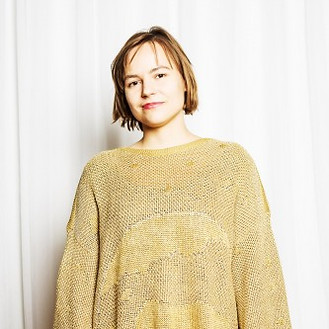
2012
Maija Luutonen
s. 1978, ESPOO
Maija Luutonen explores representation in painting and pushes its boundaries while simultaneously expanding and stretching the parameters of the medium. Her work is characterized by innovative thinking, a fresh perspective, versatility, and a consistently exploratory approach. Her process is slow and precise, and her use of materials is open-minded. Her works, which are difficult to put into words, explore the problems of representation and reality. Luutonen’s art sparks insights, inspires awareness, and thereby sharpens the viewer’s relationship with reality.

2001–2010
2001
2002
2003
2004
2005
2006
2007
2008
2009
2010
Paavo Paunu
Viggo Wallensköld
Vesa-Pekka Rannikko
Minna Jatkola
Tea Mäkipää
Pauliina Turakka Purhonen
Mari Sunna
Terike Haapoja
Petri Eskelinen
Leena Nio
1981–1990
1981
1982
1983
1984
1985
1986
1987
1988
1989
1990
Pekka Kauhanen
Tapani Mikkonen
Silja Rantanen
Pekka Pitkänen
Anna Alapuro
Helge Riskula
Chris af Enehjelm
Pentti Meklin
Pauno Pohjalainen
Ilppo Alho
Markus Konttinen
Mari Tykkyläinen
Pertti Kukkonen
Harri Leppänen
Ilkka Väätti
Outi Pienimäki
Markku Pääkkönen
Juha Saitajoki
Thomas Nyqvist
Elina Liikanen
Antti Nordin
Anne Tompuri
Nils Haukeland
Helena Kronqvist
Henrietta Lehtonen
Timo Heino
Riitta Uusitalo
1991–2000
1991
1992
1993
1994
1995
1996
1997
1998
1999
Susanne Gottberg
Antti Tanttu
Irmeli Hulkko
Olli Jaatinen
Kare Lampinen
Marie Brask
Veli Granö
Jari Kylli
Mikko Paakkola
Katarina Reuter
Jaakko Tornberg
Johanna Ilvessalo
Sirpa Hynninen
Anssi Törrönen
Saara Ekström
Maija Holma
Marjatta Kekki
Sari Porthén
Pekka Sassi
Minna Törrönen
Palkintoa ei jaettu
Johanna Aalto
Janne Räisänen
Maija Helasvuo
Tiina Laitanen